
By Graham Thomas
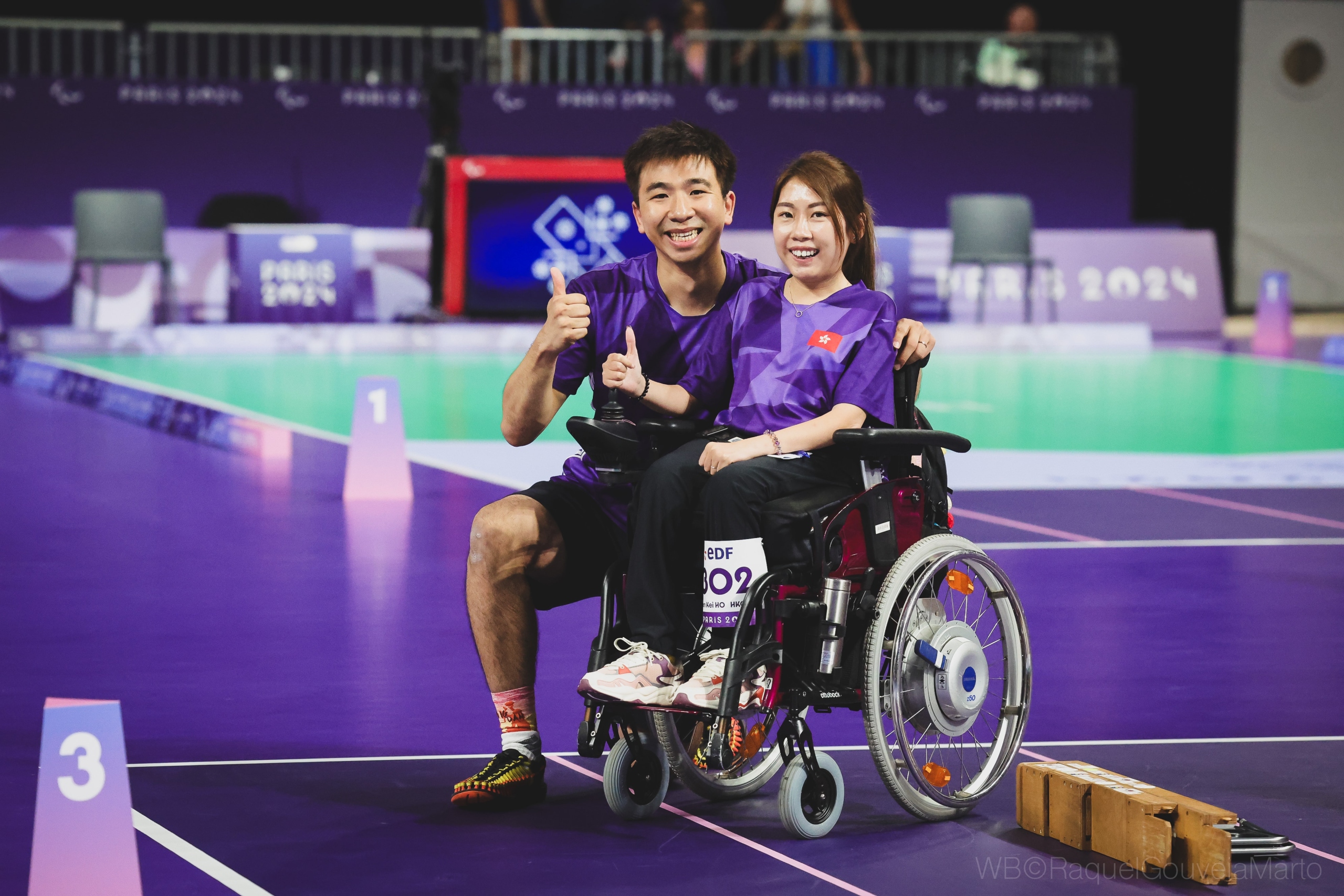
As preparations intensify for the Seoul 2026 World Boccia Championships, it’s a chance to turn the spotlight to the pairs and team competitions — and the brilliance of athletes such as Hong Kong’s Ho Yuen Kei (pictured above).
The World Championships field has been shaped by a qualification process designed to reward excellence, while accelerating the sport’s global development.
It means with 16 teams and pairs already confirmed for each of the three competitions – Team (BC1/BC2) and Pairs (BC3) and Pairs (BC4) – the outline of the championships is clear: Seoul will bring together proven Paralympic medal-winning partnerships, established powerhouse nations and a growing group of ambitious newcomers eager to test themselves on the world stage.
How the field was built
World Boccia has a qualification system that attempts to blend performance, opportunity and long-term strategy.
Team and pairs places for each of the three competitions were allocated through a combination of:
- Three regional championship slots each from Europe, Asia and the Americas (9)
- Gold medallists from the African Regional Championships in Cairo (1)
- An automatic host-nation slot (1)
- Remaining places filled via the year-end world rankings snapshot (5)
Those 16 places were confirmed on March 2, with national federations now required to formally name their team and pair athletes by May 1, ahead of a final confirmation deadline on May 15.
While teams can technically decline places, it is expected the field will remain intact.
Crucially, the remaining individual places — bringing the total field to around 198 athletes — will be finalised in June, using the December 31 world ranking snapshot rather than current rolling rankings.
This ensures consistency and transparency in selection, even if it leaves some high-profile athletes temporarily absent from early qualification lists.
Proven champions back in contention
The structure of the pairs and teams competitions means many of the biggest names from the Paris 2024 Paralympic Games are once again likely to be central figures.
Few partnerships arrive in Seoul with stronger credentials than Hong Kong’s BC3 pair, led by Paralympic double gold medallist Ho Yuen Kei.
Her composure and tactical control were decisive in Paris – where she was crowned Paralympic champion at both BC3 individual and BC3 Pairs, alongside Tse Tak Wah – and Hong Kong’s qualification in both BC3 and BC4 pairs makes them one of the most dangerous nations across combined events.
Host nation South Korea will look again to Jeong Ho-won, part of the BC3 pair that claimed silver in Paris, with teammate, Kang Sun-hee.
With automatic host qualification and home advantage, South Korea’s medal ambitions will be obvious.
In the BC4 pairs, Colombia arrive as reigning Paralympic champions. The gold-winning duo of Edilson Chica and Leidy Chica set the standard in Paris with their accuracy and decision-making under pressure — and remain among the leading contenders to repeat that success at world level.
Team battles reshaped by new rules
Perhaps the most significant storyline heading into Seoul is a change in team composition rules, introduced this season and now in effect for World Cups and World Championships.
Under the revised regulations, teams may no longer field two athletes from the same medal event category — for example, two BC2 men. Instead, teams must include a mix, such as a BC2 male, a BC2 female or a BC1 athlete, or alternative combinations that preserve balance.
The goal is to move decisively toward a 50/50 gender split at major championships, aligning Worlds and future Paralympic cycles with broader equality objectives.
While the transition presents challenges — particularly in BC1 female quotas — it also reshapes medal prospects and tactical planning.
That change places renewed emphasis on depth rather than dominance by a single category — and few teams embody that better than China.
Gold medallists in the BC1/BC2 team event in Paris, China’s blend of structure, adaptability and gender balance makes them the reference point once again in Seoul.
Close challengers include Indonesia, silver medallists in Paris, and Japan, who claimed bronze. All three nations have the personnel depth to adapt smoothly to the new regulations.
Great Britain, world-ranked number three, have qualification secured across team and pair events, maintaining Europe’s presence in the medal conversation.
Small nations, big statements
Beyond the established powers, Seoul will also showcase one of boccia’s most compelling growth stories.
El Salvador have qualified a BC1/BC2 team for the World Championships for the first time after winning the Americas regional title — a landmark achievement for a nation whose international boccia programme only began little more than a decade ago.
Their rise has been fuelled by a strong core of athletes, including a male and female BC2 competitor — one of whom, Rebeca Duarte, reached the quarter-finals in Paris — alongside a BC1 athlete who completes the ideal balance under the new team rules.
El Salvador’s breakthrough reflects a broader regional shift, supported by initiatives such as the newly structured Central America Para Games.
Other emerging stories include first-time team qualification for the Czech Republic, continued progress from Bermuda, and growing individual representation from Saudi Arabia, even where pairs did not qualify.
With Paralympic gold medallists returning, team strategies reshaped by regulation, and new nations stepping confidently onto the world stage, the pairs and teams competitions in Seoul promise to be among the most exciting and unpredictable in championship history.