

By Graham Thomas
There is no secret behind Indonesia’s emergence as one of the world’s leading boccia nations.
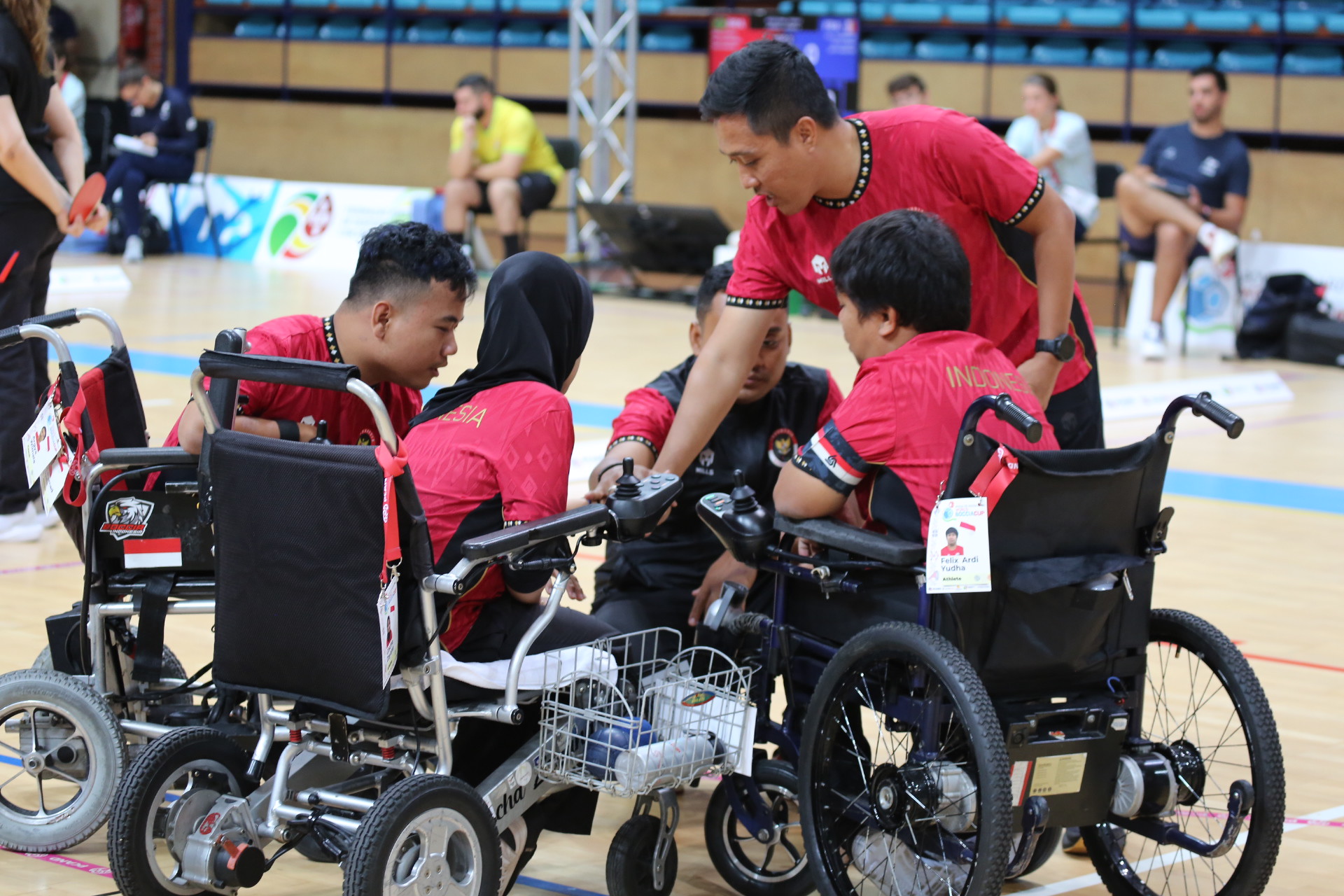
According to national coach Argya Wimala, (pictured above with his Indonesian BC1/2 team) the formula is remarkably straightforward: train every day, invest in elite facilities, and build a programme backed by government support.
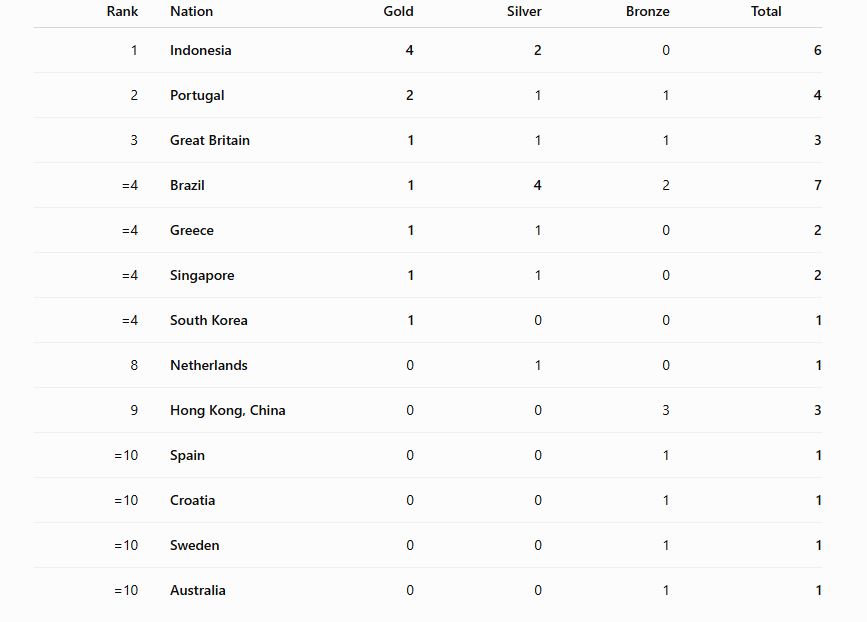
The approach paid off spectacularly at the Póvoa 2026 World Boccia Cup, where Indonesia finished as the tournament’s most successful nation with four gold medals and six medals overall, underlining the country’s rapid rise from international newbies to genuine world leaders.
As the final litmus test of readiness before the Boccia World Championships in August, it was one the Asian nation passed comfortably.
“We didn’t really know much about boccia until 2018 when the Asian Para Games was hosted in Jakarta,” said Wimala as he reflected on the success in Póvoa.
“We don’t know about classification. We don’t know about the different classes. But after that tournament the government decided investment is a very good idea.
“By 2021, we held our first national event and I was surprised at how many athletes we had. We had training camps and we prepared for Paris at the Paralympics of 2024.”
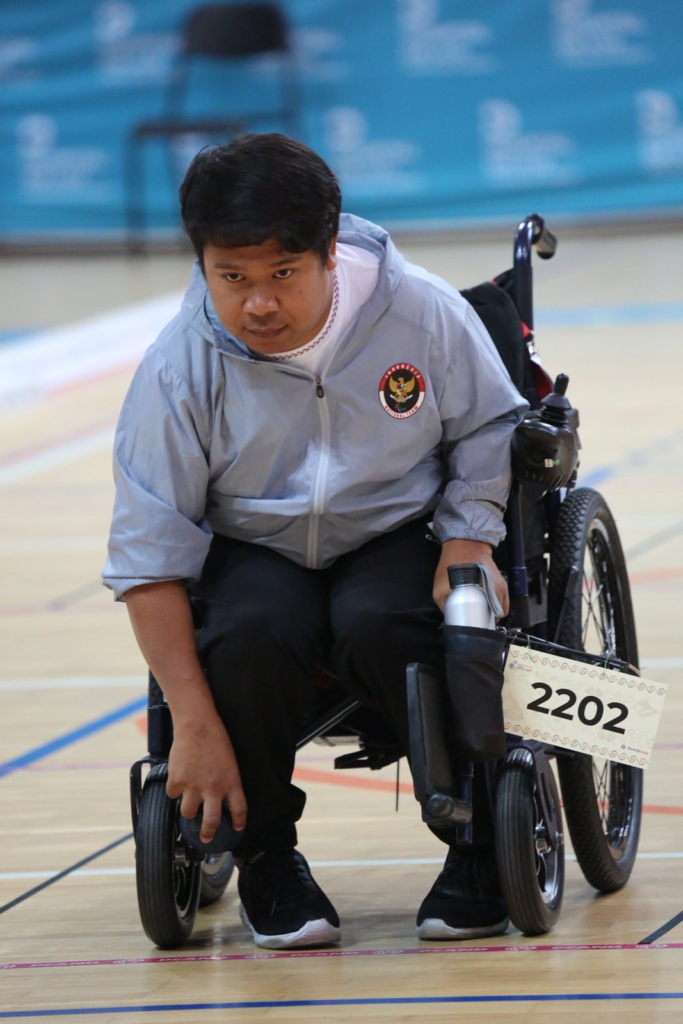
Felix Ardi Yudha, BC2 Male champion
That transformation has been extraordinary.
Only eight years ago, Indonesia was still learning the basics of the sport. This week in Portugal, they dominated one of the strongest fields of the year ahead of the World Championships in Seoul.
Indonesia struck gold through Muhamad Syafa in the BC1 men’s event, Gischa Zayana in BC2 women’s competition, Felix Ardi Yudha in BC2 men’s competition and the BC1/2 team event.
Handayani Handayani added silver in the BC1 women’s event, while Muhammad Herlangga completed an outstanding tournament by finishing runner-up behind teammate Ardi Yudha in an all-Indonesian BC2 men’s final.
Brazil won the most medals overall with seven, but Indonesia’s four gold medals comfortably placed them at the top of the medal table.
Portugal earned huge cheers from local supporters after home victories for Carla Oliveira in the BC4 women’s competition and the BC4 pairs team.
And Great Britain enjoyed notable success thanks to the continuing hot streak for Stephen McGuire, who won gold in BC4 Male and silver in BC4 Pairs.
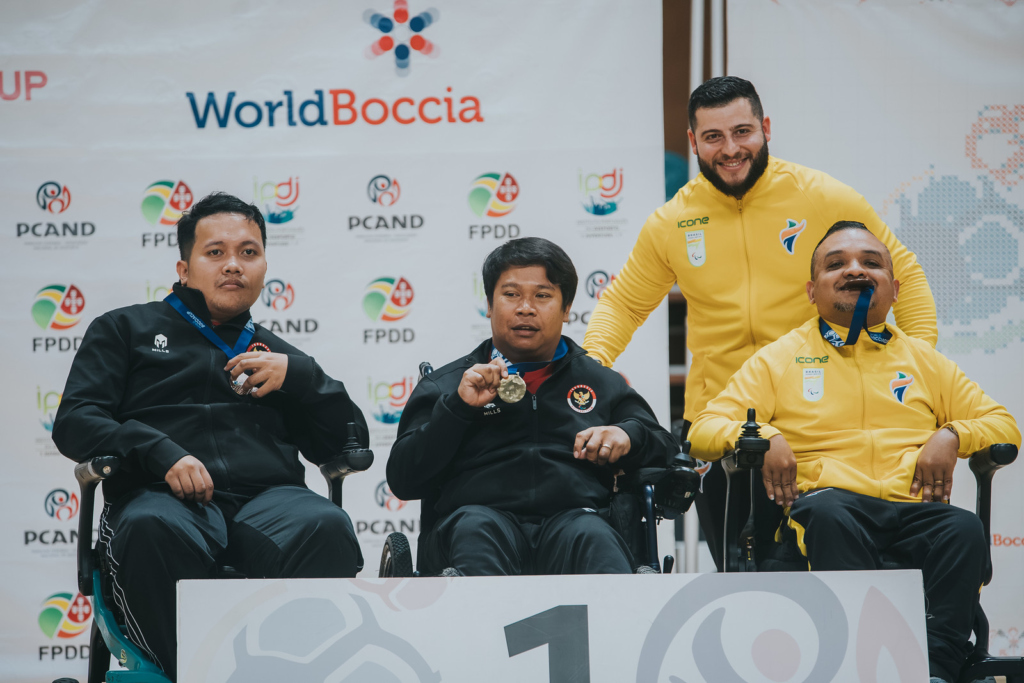
Gold medal winner at BC2 Male, Felix Ardi Yudha, alongside fellow Indonesian Muhammad Herlanga (silver) and Brazil’s Maciel Santos (bronze)
But Indonesia’s show of strength, just weeks out from Seoul, was the big story.
For Wimala, the success was the reward for years of planning rather than one exceptional week.
“We’re so happy,” he said. “We got to so many finals and we got four gods, which is good for me, and good for us.”
A central pillar of Indonesia’s success has been the creation of a national high-performance training centre in Karanganyar, just outside Surakarta, where the country’s best players train together throughout the year.
It is here that champions are shaped and moulded.
Wimala believes that commitment separates Indonesia from many of their rivals.
“I think maybe, because we have the training every day, we have an advantage” he explained.
“I asked some other national teams, they’re training only two or three times in the week, I think. Maybe that’s the difference.”
The programme has also benefited from significant government backing since the Tokyo Paralympics, with Indonesia’s Ministry of Sport making boccia a priority while corporate partners have also contributed funding.
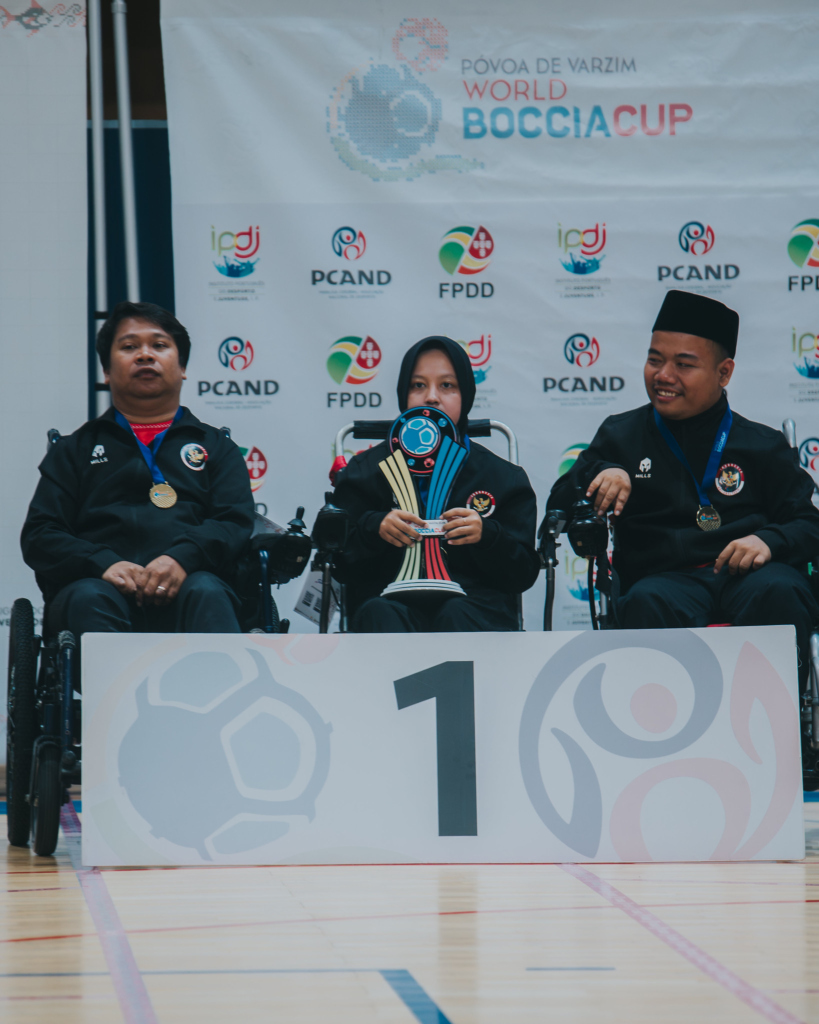
BC1/2 Team Winners, Indonesia
Financial support has enabled Indonesia not only to establish a permanent national programme but also to learn from established powers.
In 2019 the squad travelled to South Korea for an intensive training camp, studying classification systems, coaching methods and elite preparation.
“On 2019, we studied in Korea,” Wimala recalled. “We had a training camp, we studied classification. And we studied many, many things in there.”
That willingness to learn has accelerated Indonesia’s development to such an extent that they are now the team everyone else is trying to catch.
Watching the Indonesian athletes compete in Póvoa, one feature stood out above all else.
While many opponents displayed emotion throughout their matches, Wimala’s players remained calm, composed and intensely focused.
“Comfort” is the word they use.
The coach says that mental control sits above every tactical or technical aspect.
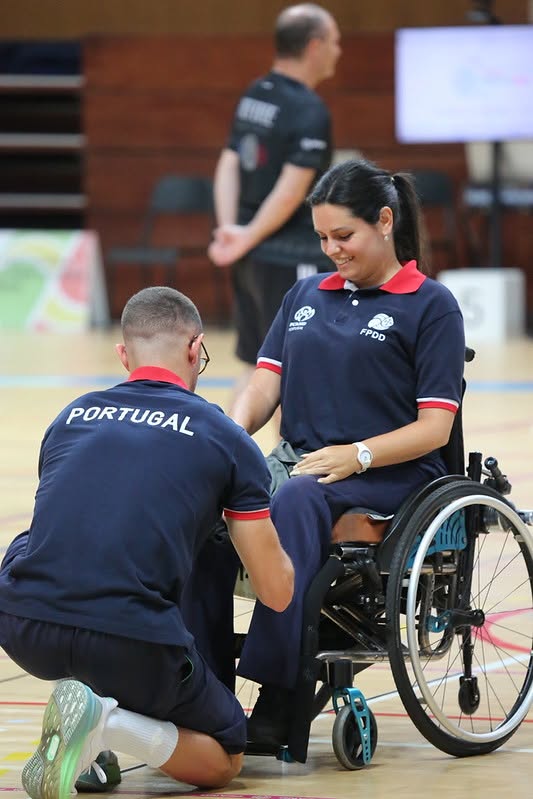
BC4 Female winner, Portugal’s Carla Oliveira
“I say to the athletes that when you on the court, the technique, the game plan or the tactic is nothing if you don’t focus,” he said.
“The first thing, you must be focused and you keep the comfort. So the tactical and the game plan, it will then be good.”
That philosophy was evident throughout the week as Indonesia repeatedly delivered under pressure, reaching finals across multiple classifications.
But even with four gold medals secured, Wimala insists there is no room for complacency.
After just a few days’ rest, the team will immediately begin preparations for the World Championships in Seoul, where he has already identified one area requiring improvement.
“We will continue the training after this,” he said. “Maybe just three or five days we will take rest after coming back home and I will train again.
“Especially the long ball – is not good for us at the moment.”
Opponents, he believes, are already adapting to Indonesia’s style of play by using longer throws to disrupt their tactical approach, something exposed during matches against the Czech Republic.
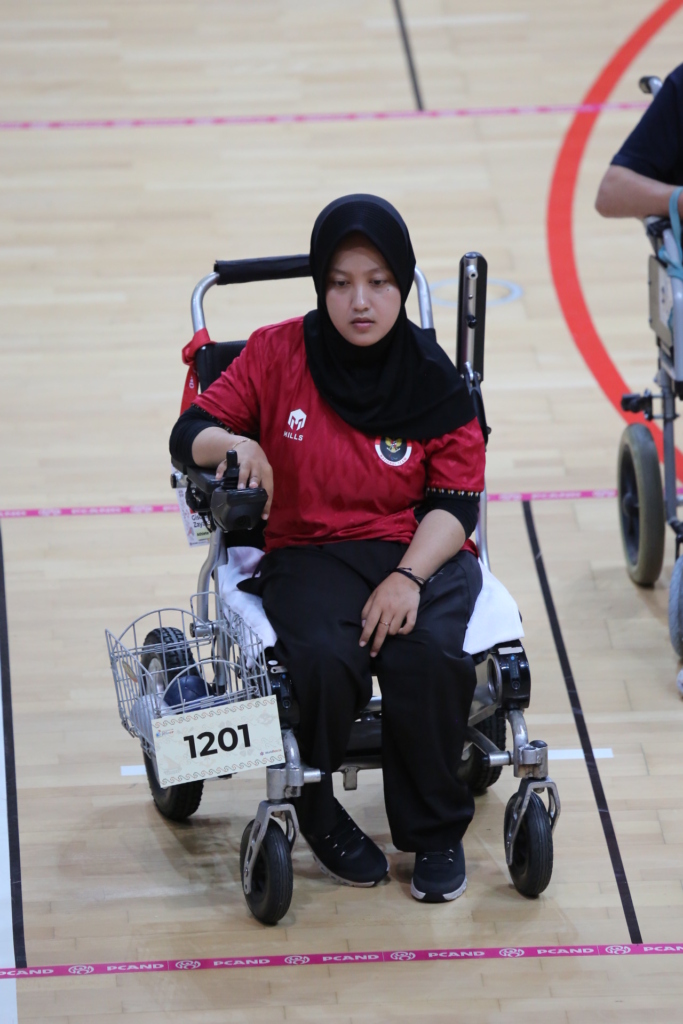
Gischa Zayana of Indonesia, BC2 Female winner
Away from competition, Indonesia’s next challenge is growing boccia’s profile back home.
The national team’s social media channels were only launched shortly before arriving in Portugal, and Wimala hopes the World Championships will help inspire more people with to take up the sport.
“We hope the people in Indonesia know about the boccia national team when the World Championships arrives . . . and inspires the people with cerebral palsy.”
Indonesia’s rise has not gone unnoticed within the sport. Great Britain’s multiple Paralympic champion David Smith predicted several years ago that the country would become boccia’s next powerhouse after seeing its talented young players emerge.
Those words now look prophetic.
In Póvoa, Indonesia did more than top the medal table. They confirmed that the balance of power in world boccia is shifting, driven by a programme built on relentless training, smart investment and a belief that sustained success comes from preparation.
If this week’s performances are any indication, Indonesia’s remarkable ascent may still only be beginning.
Here is a list of all those who made the podium in Portugal.
BC1 Female
 Andreza De Oliveira (Brazil)
 Handayani Handayani (Indonesia)
 Dora Basic (Croatia)
BC2 Female
Gischa Zayana (Indonesia)
Chantal Van Engelen (Netherlands)
Ana Correia (Portugal)
BC3 Female
Dimitra Papadopoulou / G. Papadopoulos (Greece)
Nurulasyiqah Mohammad / N. A. Rumzi (Singapore)
Maria Bjurstrom / A.C. Bjurstrom (Sweden)
BC4 Female
Carla Oliveira (Portugal)
Laissa Guerreira (Brazil)
Yuen Cheung (Hong Kong, China)
BC1 Male
Muhamad Syafa (Indonesia)
José Carlos Chagas (Brazil)
Juan Manuel Montilla (Spain)
BC2 Male
Felix Ardi Yudha (Indonesia)
Muhammad Herlangga (Indonesia)
Maciel Santos (Brazil)
BC3 Male
Howon Jeong / S. Kim (South Korea)
Panagiotis Katsonis / A. Bitsakaki (Greece)
Daniel Michel / A. Maddern (Australia)
BC4 Male
Stephen McGuire (Great Britain)
Eliseu Dos Santos (Brazil)
Yuk Wing Leung (Hong Kong, China)
BC3 Pairs
Singapore
Brazil
Great Britain
BC4 Pairs
Portugal
Great Britain
Hong Kong, China
BC1/2 Team
Indonesia
Portugal
Brazil
