
By Graham Thomas
Japan and South Korea laid down an early marker for the 2026 boccia season at the Montreal World Cup.
But World Boccia Operations Manager Dom Tremblay believes the opening tournament of the year also highlighted the growing depth and tactical evolution developing across the international game.
The Canadian event, which concluded this week, featured 81 athletes from 21 nations and offered the first major indication of form ahead of September’s World Championships.
Japan and South Korea finished level at the top of the medal standings with seven medals apiece, underlining what Tremblay described as Asia’s growing grip on the sport.
“It continued to show that really, Asia is mostly dominating the sport at present,” Tremblay reflected.
Japan’s performances, particularly, caught the eye, with medals spread across classifications and a number of emerging athletes producing breakthrough displays.
“Japan and Korea got seven medals and were the two leaders in terms of medal standing,” Tremblay added.
“To be equal to Korea, for Japan, I think that is interesting. We saw very good boccia from the Japanese athletes, but we need to consider that it’s still the first event of the year.”
Only Japan, South Korea and Brazil travelled to Montreal with full squads, and significantly those three nations also occupied the top three positions in the overall standings.
Mexico produced one of the surprise results of the tournament by winning gold in the BC1/2 team event ahead of South Korea, while Peru celebrated an impressive triumph in the women’s BC3 category through Niurka Callupe and assistant Carolina Vela.
“Mexico got a gold medal in BC1/BC2 teams – which is an achievement I didn’t see coming. I haven’t seen them medal or finish this high in the teams and pairs competition before,” Tremblay added.
“Also, Peru was fascinating with the individual female BC3 with Niurka. She won gold and she’s been very good the last couple of years, but for her to win gold was also an impressive surprise.”
Japan’s success extended beyond overall medal numbers. There were some stand-out individual performances.
Masayuki Arita and assistant Chiho Arita secured gold in the men’s BC3 category, defeating Greece’s Grigorios Polychronidis in the final after the Greek veteran had once again overcome South Korea’s Howon Jeong in a major semi-final clash.
Arita arrived in Montreal ranked 14th in the world, having previously finished runner-up at a World Cup event in China and sixth at the Asian-Oceania Regional Championship.
Japan also collected silver in BC3 pairs and gold in BC4 pairs, where they finished ahead of Germany and Portugal despite not enjoying the same level of individual success in BC4 competition.
Elsewhere, Singapore’s Jovin Tan emerged as another standout performer after taking gold in the men’s BC1 category.
The young athlete is still early in his international career, but Tremblay believes his consistency suggests greater achievements could follow.
“It’s his first gold medal in the BC1 male category, so it will be interesting to follow if he can continue to have good results,” he said.
“It’s impressive progress because he finished the top eight at all the competitions that he went to.”
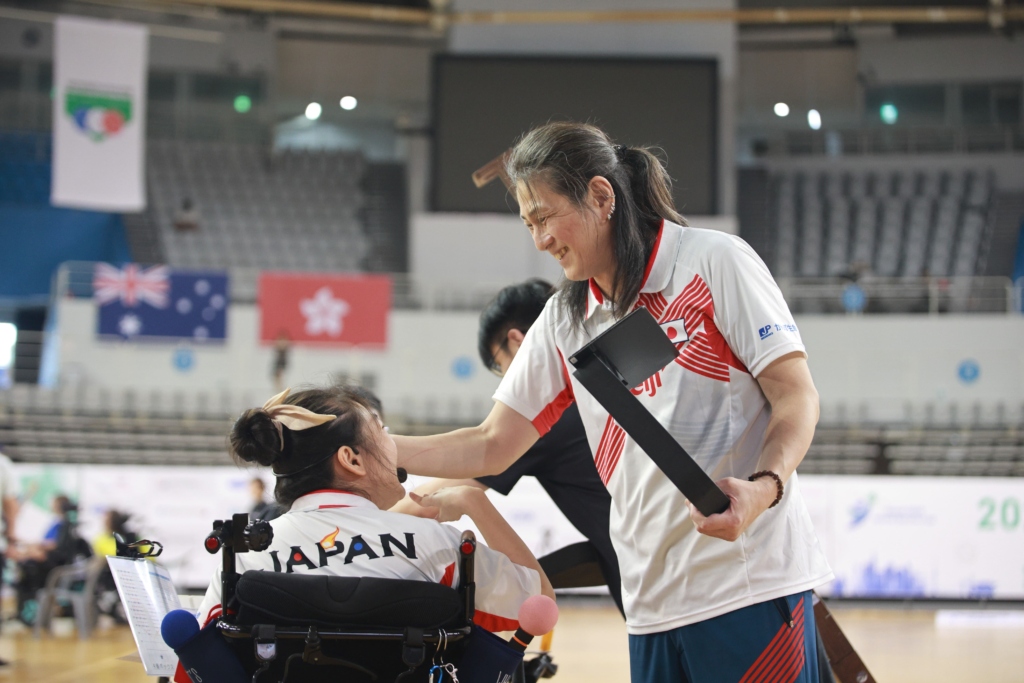
The women’s BC1 competition was won by Brazil’s Andreza Oliveira, with Japan’s Hiromi Endo taking silver and Singapore’s Yee Jeralyn Tan claiming bronze.
Tremblay believes Endo is among the athletes to watch in 2026.
“She’s probably the female BC1 to look at,” he said.
“She confirmed the good form that she had in 2025.”
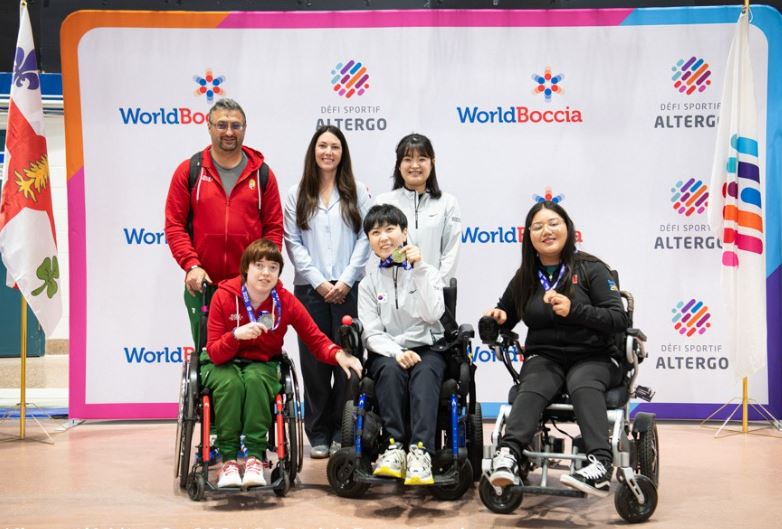
South Korea’s medal haul included gold for Ahyoung Choi in women’s BC2 – where she beat Hungary’s Vivien Nagy (both pictured above, top image: Pic: Patrick Beauchemin) – and silver medals for Sungjoon Jung and Kyeongsoo Kim in the men’s BC1 and BC4 categories respectively, alongside gold in BC3 pairs.
However, one of the surprises of the week came from Hong Kong, recently one of the strongest boccia nations, as they left Montreal without a medal.
“That will be another experience because they did not win any medal,” Tremblay said.
“Which is surprising considering that John Loung was ranked first in the world.”
Tremblay suggested the inconsistency often found within BC1 competition can make predicting results difficult.
“The most difficult thing in the BC1 category is to be consistent,” he added.
Brazil also enjoyed a productive week through Maciel Santos’ gold in men’s BC2 and Andreza Oliveira’s women’s BC1 triumph, while Portugal’s Carla Oliveira won women’s BC4 gold.
Israel’s Nadav Levi, who earned silver in men’s BC2, also impressed.
The host nation endured frustration in BC4 pairs despite entering as the world number one ranked team.
Canada finished fifth in their pool after a series of narrow defeats.
“I don’t think the fact that Canada finished fifth in their pool really represented how they played,” Tremblay added.
“They were involved in some very close matches every tme. They have good depth in the BC4 category.”
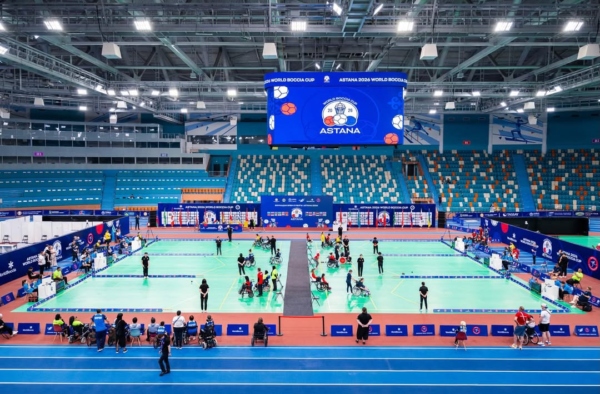
Attention now turns quickly towards upcoming events in Pujulahti, Finland (World Boccia Challenger) – with matches starting on May 9 – and Astana, Kazakhstan (World Boccia Cup), as Montreal offered only an early snapshot of the international landscape ahead of the World Championships.
“Winning now doesn’t mean that you win in September,” said Tremblay.
“But all World Cup athletes will want to ensure they produce good performance so they can build momentum.”