
By Graham Thomas
World Boccia have appointed Ben Rand as the organisation’s new Chief Medical Officer.
He brings a wealth of clinical expertise, military experience and a deeply held commitment to inclusivity in sport.
An orthopaedic surgeon by training, Rand combines a predominantly paediatric practice with experience in complex adult deformity work.
Based at Birmingham Children’s Hospital in the UK, and formerly at the Royal Orthopaedic Hospital, he has spent years treating patients with neuromuscular conditions, including cerebral palsy, giving him a close understanding of the challenges faced by many athletes within boccia.
Military medical service
Rand’s medical career is complemented by 14 years’ service in the Royal Air Force, where he worked as both a doctor and orthopaedic surgeon.
During that time, he witnessed the transformative power of adaptive sport in rehabilitation, particularly among injured service personnel.
“My background includes military medical service, where I witnessed first-hand the transformative role of adaptive sport in rehabilitation and recovery – both of which have developed a strong appreciation for the challenges, and remarkable potential, of athletes in Paralympic sport,” says Rand.
“These experiences continue to shape my perspective on resilience, opportunity, inclusion and human potential. In that, I have found a genuine match for my ideals in a sport – boccia.
“I am strongly motivated in sport by values of inclusion, fairness, and athlete-centred care, I am passionate about supporting clean sport and advancing robust, ethical medical frameworks.
“I will bring a thoughtful and forward-looking approach to leadership, with my ambition being to strengthen anti-doping education, enhance athlete wellbeing – including mental health – and contribute to sustainable systems that will support boccia’s continued growth on the global stage.
Inclusive values
“I’ve seen the role that sport plays in recovery,” he explained.
“When those individuals go on to do super inspirational things – whether that’s in the Paralympic arena or beyond – those experiences shape your perspective on resilience.”
It is this perspective, alongside a long-standing appreciation for the inclusive values of sport, that drew him to boccia.
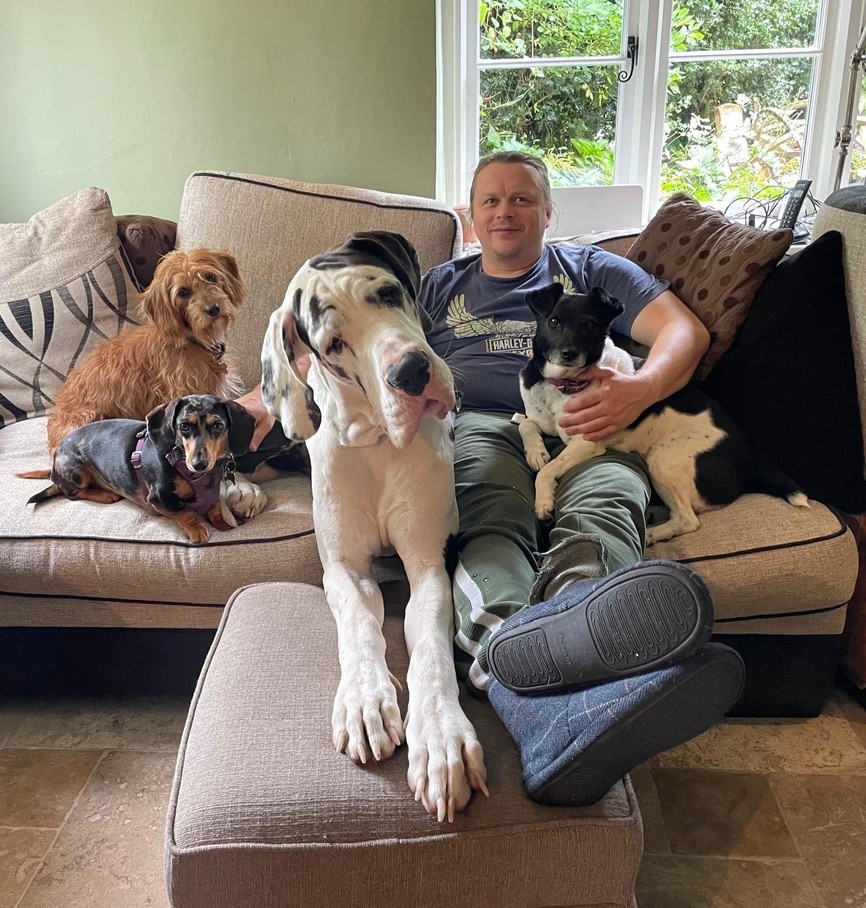
Ben Rand with his rescue dogs
Introduced to the opportunity through his partner, who works within rugby, Rand immediately recognised the alignment between his personal values and the sport’s ethos.
“I love activities that bring people together but also allow everyone to be involved,” he says.
“Boccia is inextricably inclusive and gives an opportunity for competition to the most challenged athletes. That’s a really positive thing to try to give something back to.”
In his new role, Rand will oversee medical governance across World Boccia, including anti-doping compliance in line with World Anti-Doping Agency standards, while also championing athlete welfare.
He describes the position as requiring a balance between two key responsibilities.
“I see myself as having a responsibility to the organisation – maintaining our credibility and compliance – but also to the athletes themselves,” he says.
“There are ‘two hats’: ensuring we meet those global standards, while also understanding individual challenges and making sure athletes feel heard.”
Listening to athletes
Rand is open about the learning curve ahead as he transitions into an international sports governance environment, but views this as an opportunity for growth.
“My experience of working within sport organisations isn’t extensive, so that’s a growth area,” he acknowledged.
“But attitude and a solid foundation are what get you started, and I feel I’m in a really supportive environment to develop.”
A key early priority will be listening to athletes and understanding their experiences, particularly around anti-doping processes such as whereabouts reporting and therapeutic use exemptions.

Ben Rand
Rand is keen to ensure that necessary systems do not become an unnecessary burden.
“How do we make the situation both credible and not a negative experience?” he says.
“It’s about engaging athletes and their support networks, showing them their views matter, and making it a two-way process.”
He also recognises the diversity of athlete journeys across the global boccia community, from well-supported systems to those with significant logistical and cultural barriers.
“Even getting to the point of playing boccia in an organised event can be a massive challenge in some parts of the world,” he noted.
“Understanding those differences is crucial.”
Rand is expected to attend some major international competitions in the coming months as part of his onboarding, using those opportunities to connect directly with athletes, coaches and organisers.
Looking ahead, he is clear about his ambition: to strengthen both the integrity of the sport and the experience of those who compete in it.
“If we can combine credibility with genuine care for athletes, then we’re moving in the right direction.”
Away from medicine – and boccia – Rand is a skydiver who has made over 1,200 jumps, an ironman triathlete, and owner of four rescue dogs, who enjoys a celidh and “a nice real ale.”