

By Graham Thomas
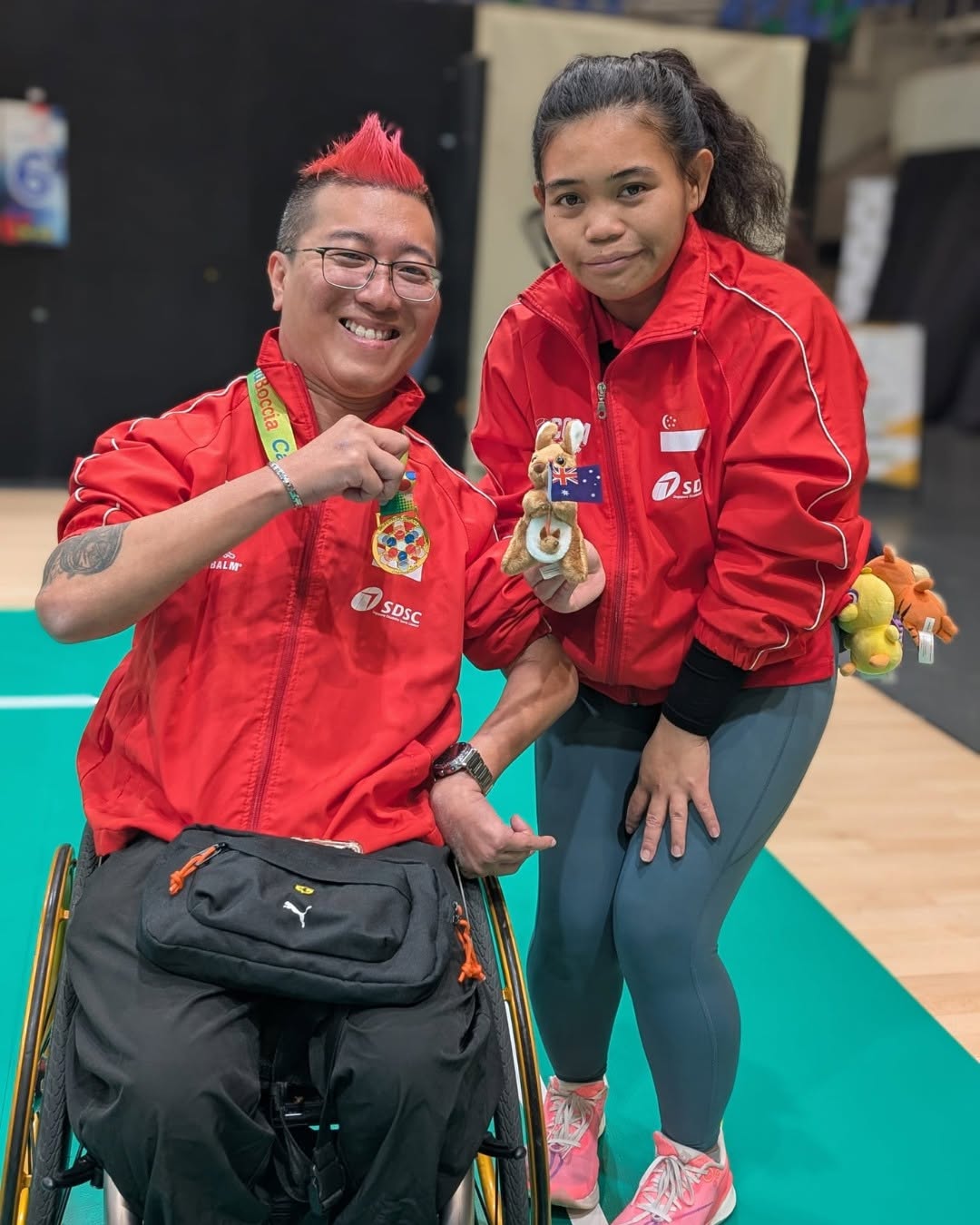
Jovin Tan has made a colourful start to the Aichi-Nagoya 2026 Asian Para Games, but Singapore’s pink-haired BC1 star is not the only athlete using a distinctive look to make his mark on the competition.
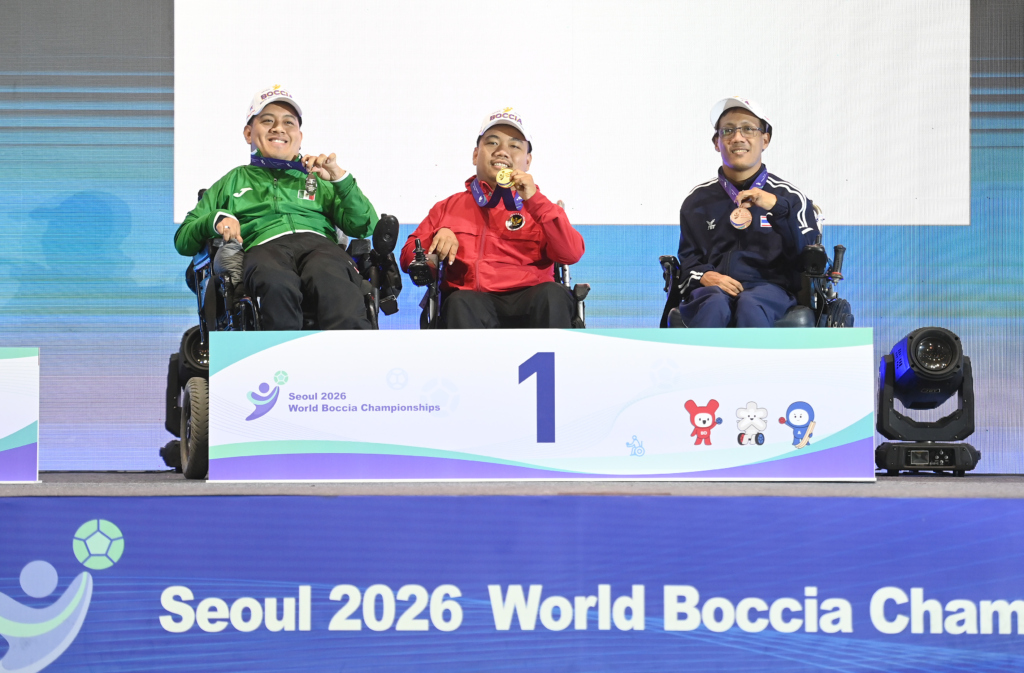
Indonesia’s Muhamad Syafa has dyed his hair blue for the tournament as the recently crowned world champion attempts to back up his September success in Seoul.
The vibrant competition is also part of the World Boccia Challenger series.
Tan, a four-time Paralympic sailor who switched to boccia after his original sport was dropped from the Paralympic programme, began his campaign with an emphatic 8-0 victory over China’s Luo Guanzhong in the men’s individual BC1 competition at Nagoya’s Rainbow Hall.
The 40-year-old (pictured above: Pic: SDSC) followed that with a 5-3 win over Kazakhstan’s Kuanysh Askarbekov and will meet Hong Kong China’s Kam Chau Chan in the first knockout stage.
“I like to be noticed,” Tan said. “I like to be different from people. The hair colour I’ve had since doing (para) sailing.
“I want to be the one that stands out from the crowd. I bleach my hair with the help of my care-giver before each major Games.
“It used to be bright red, but it’s now pink. The colour has faded so it will need a touch up in the next few days.
“When I was younger I couldn’t participate in a lot of things and I used to be very afraid of how people looked at me. But after I took up sports I realised it was something I could do. I want more people to notice me so that’s why I have to be different.”
For Tan, the striking appearance reflects a journey through elite sport that has demanded adaptability as well as competitive resilience.
After the Rio 2016 Paralympic Games, he was forced to look for a new sporting challenge when para sailing was removed from the Games programme. He discovered boccia in 2022, although the sport took time to win him over.
“When I took up boccia my honest opinion is that it was a bit boring,” Tan said. “It was too slow, but after a while I learned to appreciate the sport.
“Sailing taught me a lot of things, like patience, which I can use in boccia. In sailing you’re dealing with elements that are not in your control with the wind and waves.
“Boccia is a slower pace but there are still factors we can’t control like the flooring, the venue and our opponent’s playing style. I still enjoy both sports as both require a lot of thinking, a lot of strategy, tactics.
“After sailing was removed after Rio 2016 I started thinking of what I could do as I still wanted to be a competitive athlete.
“I enjoy the pressure and being able to represent my country at LA (Los Angeles 2028 Paralympic Games) is my dream. That is my ultimate goal.”
Tan’s ambition to reach Los Angeles underlines the importance of the Asian Para Games as a test of form and competitive composure on the road towards the next Paralympic Games.
He is hoping to polish his skills further and underline that the world-ranked No.6 has the precision, tactical judgement and nerve to be among the medal winners in the USA.
Indonesia, meanwhile, arrived in Nagoya as the team to beat after their dominant performances at the World Boccia Championships in Seoul.
Syafa offered another glimpse of the pressure facing Indonesia’s leading players when he recovered from a 3-0 deficit after the opening end to beat Kazakhstan’s Yerkhat Almat 4-3 in the men’s individual BC1 competition.
The reigning world champion admitted that his first match of the Games had begun nervously, but he was able to settle himself and work back into the contest.
“I was very nervous as it was my first game of the Games. After the first end, I was trying to keep calm when I threw. I kept it that way until the end of the game.”
Despite being the world champion, Syafa insisted that he was not feeling weighed down by expectations, pointing instead to the challenge of adjusting to the court and the early start.
“I’m not feeling the pressure. It was just my first match and I was getting used to the court. It was also a very early start so I wasn’t feeling fresh.”
Like Tan, Syafa has chosen a distinctive hair colour for competition, although his inspiration comes directly from the sport itself.
“I do it for every competition. Boccia balls are either red or blue and I just like blue.”
For Syafa, however, the significance of competing extends well beyond personal recognition.
“Boccia allows me to put the name of Indonesia in the world. I am very proud of that.”
With 92 athletes from 23 nations contesting 11 gold medals in boccia at Aichi-Nagoya 2026, the competition brings together many of Asia’s leading players.
Thailand, Indonesia, South Korea and China are among the nations expected to challenge strongly, with Indonesia hoping its success in Seoul can translate into further honours.

