

By Graham Thomas
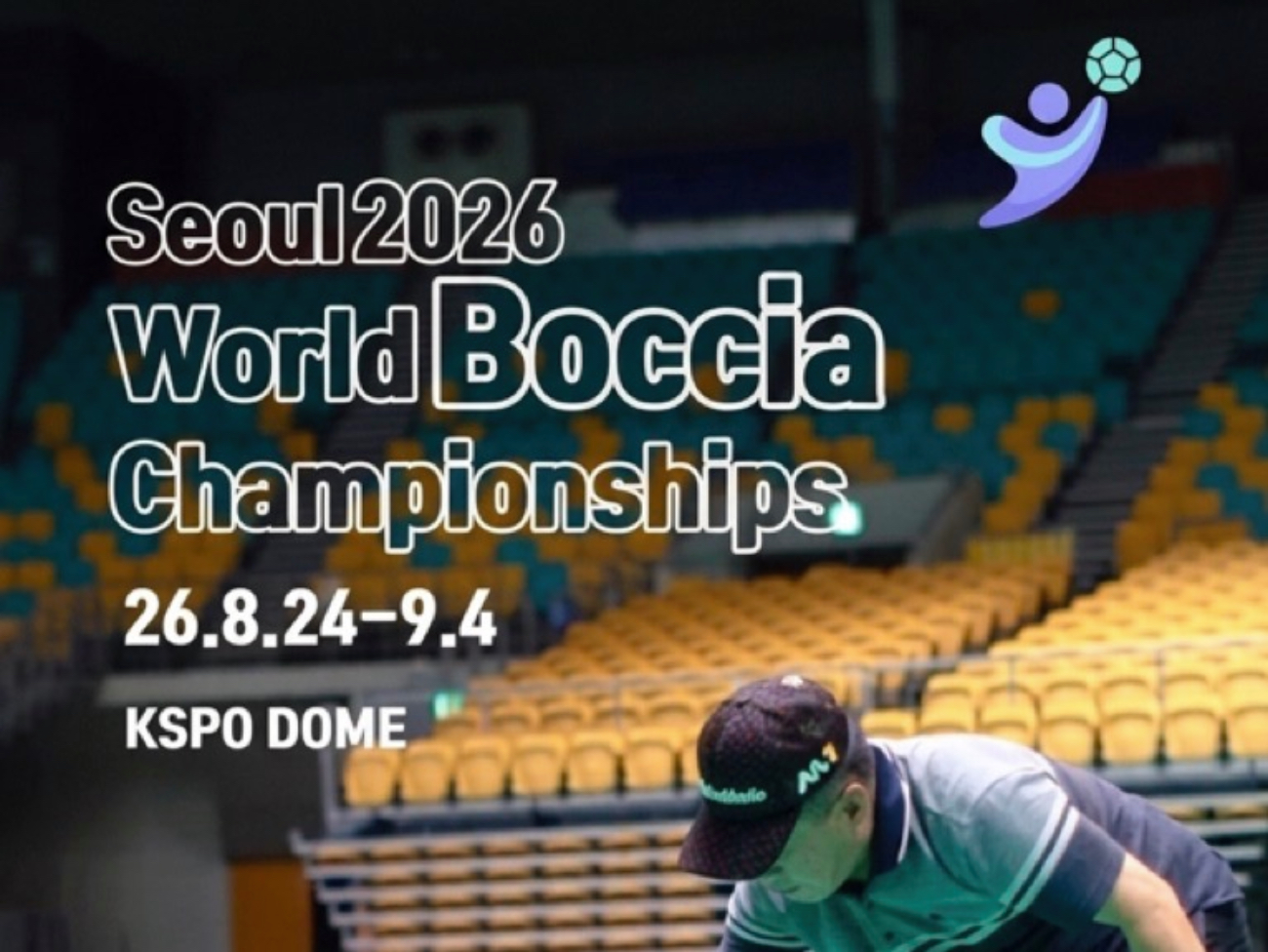
The world’s leading players will converge on Seoul this week for a World Championships that promises to be one of the most fiercely contested in the sport’s history.
From August 27, the South Korean capital will host a tournament expected to see the established Paralympic hierarchy facing a serious challenge from a new wave of contenders.
The championships bring together the leading players from the eight individual classifications, with Paris 2024 champions John Loung, Worawut Saengampa, Jeong Ho-won, Ho Yuen Kei, Lin Ximei, Aurélie Aubert, Cristina Goncalves and Stephen McGuire all seeking to underline their status on the biggest stage since the Paralympic Games.
But the form book from 2026 suggests several of them will have to improve on recent performances if they are to retain their crowns.
The clearest favourite is arguably Great Britain’s Stephen McGuire, who has established himself as the world’s leading BC4 men’s player since winning Paralympic gold in Paris.
READ MORE: World Boccia Board Candidates Stand for Election at General Assembly
The Scot arrives in Seoul as world number one by a convincing margin, and has spoken openly about embracing the pressure that comes with being the player everyone wants to beat.
McGuire’s rise has been underpinned by work away from the court as much as his technical ability, and his consistency has transformed him from a long-established international contender into the man to beat.
His British teammate David Smith, meanwhile, provides another major medal hope in BC1. The three-time world champion is seeking to reclaim the title he last won in 2018.
Smith, however, faces a formidable challenge from Indonesia’s Muhamad Syafa, who has emerged as the leading BC1 player of the post-Paris period.
Syafa spearheaded Indonesia’s extraordinary four-gold haul at the 2025 Seoul World Cup and will arrive back in the Korean capital with considerable confidence.
The BC1 women’s competition could be even harder to predict. France’s Aurélie Aubert, the Paris champion, will be in the mix, but has slipped behind Indonesia’s Handayani Handayani, Japan’s Hiromi Endo and Brazil’s Andreza Oliveira in the world rankings.
Endo was among the standout performers at Montreal earlier this year, while Oliveira has built one of the sport’s most impressive medal records. The battle between established champions and emerging challengers could make this one of the tournament’s most intriguing individual competitions.
In BC2, Thailand’s Worawut Saengampa starts as the man to beat after retaining his Paralympic crown in Paris. But Idononesian pair Felix Ardi Yudha and Muhammad Bintang Herlangga are setting a furious pace together at the top of the rankings.
Indonesia’s strength is particularly striking. The country produced three individual champions at the 2025 Seoul World Cup, while its BC1/BC2 team also took gold.
Gischa Zayana provides another Indonesian medal threat in BC2 women’s singles. She was a member of Indonesia’s Paris bronze-medal-winning team and remains among the leading names in her classification.
However, home player Ahyoung Choi will attract plenty of attention after her strong recent results and second-ranked Hiu Lam Yeung of Hong Kong makes this another class where current form could challenge the established order.
South Korea’s home advantage could prove significant throughout the championships. Jeong Ho-won, the BC3 men’s Paralympic champion, is the country’s biggest individual star, but he faces a fascinating challenge from Australia’s second-ranked Daniel Michel as well as Japan’s Masayuki Arita, who produced one of the surprises of the 2026 season with victory in Montreal.
The BC3 women’s competition is similarly loaded. Hong Kong’s Ho Yuen Kei, the reigning Paralympic champion, will start among the favourites, but Greece’s Dimitra Papadopoulou, Australia’s Jamieson Leeson, Peru’s emerging star Niurka Callupe, South Korea’s current world number one Yejin Choi and Britain’s European champion Sally Kidson all have realistic medal ambitions.
Hong Kong’s strength was highlighted by World Boccia before the championships, with Ho one of the country’s leading individual contenders.
In BC4 women’s singles, China’s Lin Ximei will attempt to repeat her Paris success, but Hong Kong’s Yuen Cheung, Portugal’s Carla Oliveira and Colombia’s Leidy Chicaprovide serious opposition. Oliveira, in particular, has emerged as one of the players to watch during 2026.
The breadth of the challenge facing the established champions is perhaps the most compelling feature of Seoul. The tournament comes only two years after Paris, but the competitive landscape has already shifted significantly.
The same forces apply in the teams and pairs events, with new nations challenging the old order.
Japan, South Korea and Indonesia have all shown formidable recent strength, while Great Britain, Hong Kong, Thailand, China and Brazil continue to provide world-class individual performers.
The fact that the leading names are being challenged by players who may not have been regarded as favourites two years ago is evidence of a sport becoming increasingly global and competitive.
And that makes predicting the Seoul champions particularly hazardous.
Seoul could prove to be the championships where the next generation begins to take control.
