

By Graham Thomas
Winning a World Cup gold medal would be enough to satisfy some athletes but for Singapore’s Nurulasyiqah Mohammad success in Portugal has simply strengthened her belief that the biggest prize is still to come.
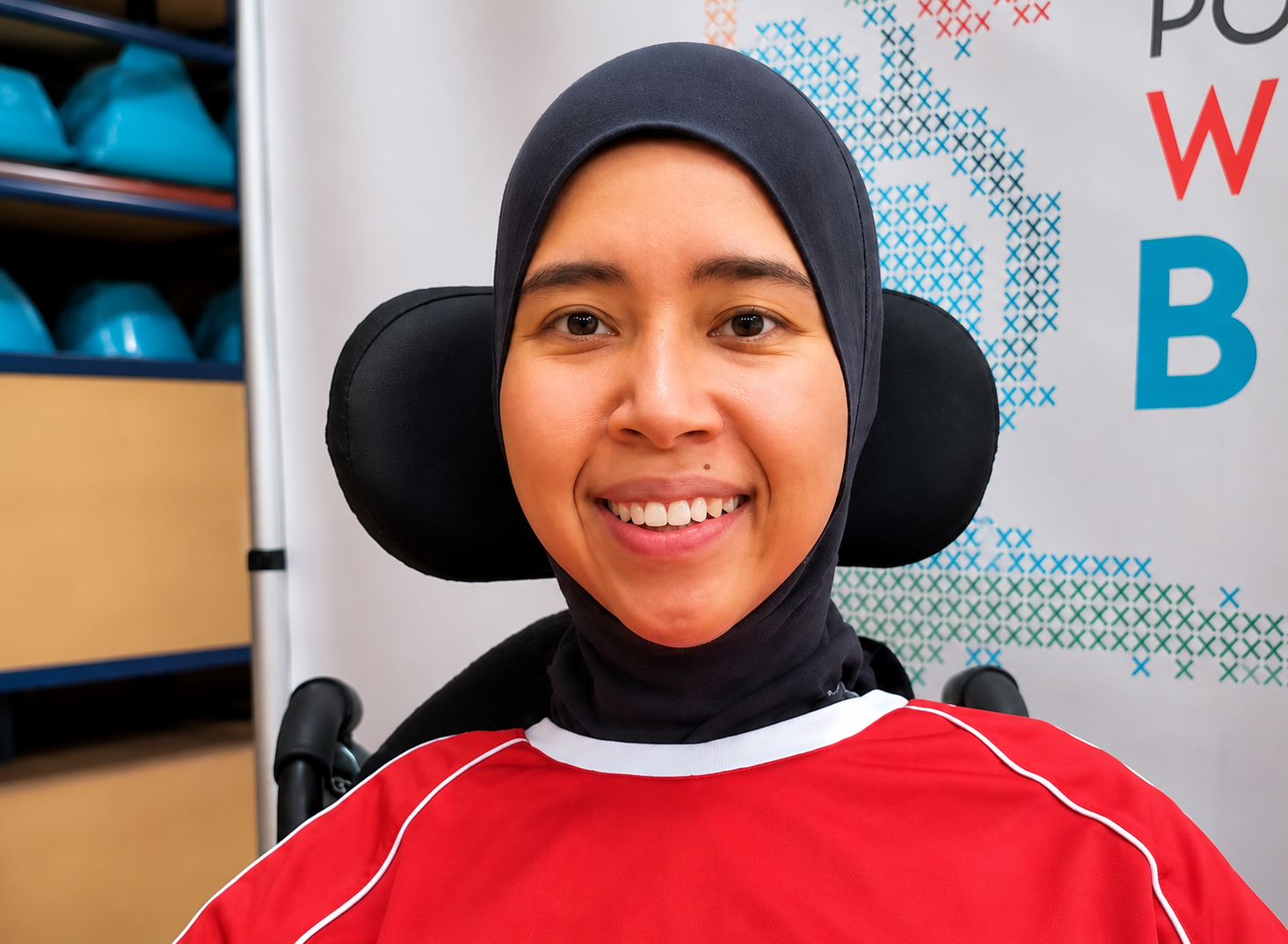
Known throughout the boccia world as Nurul, the BC3 player (pictured above) heads into next month’s World Championships in Seoul carrying genuine momentum after an outstanding week at the recent Póvoa de Varzim World Cup.
She returned home with two medals – silver in the BC3 women’s individual competition and gold in the BC3 pairs alongside Aloysius Kai Hong Gan – but insists the tournament always had a bigger purpose.
Rather than arriving in Portugal simply chasing medals, Singapore viewed the event as the perfect opportunity to fine-tune preparations for the sport’s biggest event of the year.
“The World Cup event in Povoa was always meant to be used as preparation ahead of the Seoul World Championships,” explains Nurul.
“Our goal was to just do our best, but also use this as a warm-up in the lead-in to the championships. We just went out here, did our best, andI think the result speaks for itself.”
The result certainly did.
Nuru first reached the BC3 women’s final before narrowly losing 4-2 to Greece’s Dimitra Papadopoulou to secure the silver medal.
She then combined with teammate Aloysius Kai Hong Gan to capture the BC3 pairs title, defeating France in the semi-finals before overcoming Brazil 6-2 in the gold medal match.
For a player currently ranked world No.18, it represented one of the finest tournaments of her career.
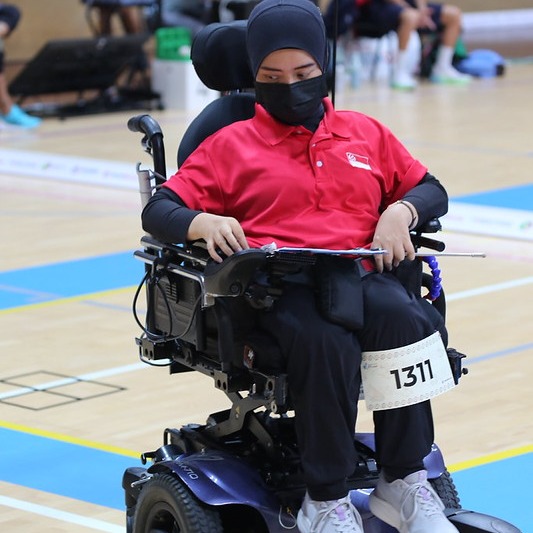
The victory over Brazil carried extra significance because it completed a remarkable full-circle story.
Singapore’s opening match of the tournament had also been against the South Americans – which Brazil won 7-2- meaning the final offered an immediate opportunity to measure how far the team had progressed during the week.
“Our team officials were a big help for us and really enabled us to progress,” added Nurul.
“Playing Brazil twice meant it was a good opportunity for us to really test our resilience and our ability to bounce back from past matches. So, it was interesting and a good experience.”
Singapore has become one of the world’s most consistent boccia nations despite its relatively small size, regularly producing athletes capable of challenging the sport’s traditional powerhouses.
Nurul has a simple analysis of the Singaporean method.
“I think we just work hard. Although we are challenged in terms of resources, the dedication and commitment of our support officials is also very important and key to our success.”
One of those among the support staff, coaches, officials and backroom personnel who has helped create an environment in which athletes can thrive on the international stage is Nurul’s long-time ramp assistant Nur Azizah Binti Ahmad Rumzi.
The pair have competed together since 2017.
Although boccia has been established in Singapore for more than two decades, public awareness has increased dramatically in recent years, particularly following the nation’s first Paralympic silver medal in Paris on 2024, won by female BC1 athlete Jeralyn Tan.
“Boccia back in Singapore is still a relatively new sport,” adds Nurul.
“But in recent years, there’s more attention been given it, especially since the Paralympic Games in Paris. Now, I would say it’s definitely a growing sport, especially among the senior citizens.
“They find it is a very mobile sport that they can easily engage in. So in Singapore, it’s quite a hit among the seniors.”
The growth of boccia has been accompanied by increasing professionalism within the Singapore programme.
One noticeable feature at Povoa – and at some other international events – is that Singapore’s coaches watch from the stands above the court rather than sitting courtside.
Nurul explains that it reflects the increasing importance of sports science and performance analysis.
“We just feel all our training and all the guidance is more important before the actual match.
“So we have gone through all that prior to the competition. In the match itself, they get to sit back and relax upstairs.
“But I also thing they are doing other important work while watching. We have a lot of video analysis towards matches and a lot of sports science support.
For Nuru personally, Portugal also represented the culmination of years of perseverance.
She has competed for 22 years and made her Paralympic debut at London 2012.
In Povoa she came through with impressive victories including a stunning 6-1 win over South Korea’s Sunhee Kang, her first-ever triumph against the world No. 4.
She continued her momentum with victories over France’s Mathilde Troude 5-1, Brazil’s Joana Pereira 5-2 in the quarter-finals, and Sweden’s Maria Bjurstrom 3-2 in a thrilling semi-final to reach the final against Greece’s Papadopoulou, falling slightly short (4-2), to win the silver.
“This is actually my third visit to Povoa,” adds Nurul. “The results here are affirmation of the effort and work over the past 20 years.
“I’m very happy for the, the effort that my team has put in to ensure our success.”
With gold and silver safely packed away, her focus has already shifted to Seoul.
“Povoa was a great motivator for us to continue to train, to maintain our progress towards the World Championships.”
Judging by Singapore’s performances in Portugal, Nurul and her pairs partner will arrive in South Korea as one of the nations to beat.
